Overview
Chaos Labs supports listing eBTC on Venus Protocol’s Ethereum deployment in the Core pool. Below are our analysis and recommendations for initial risk parameters.
Ethereum Liquidity
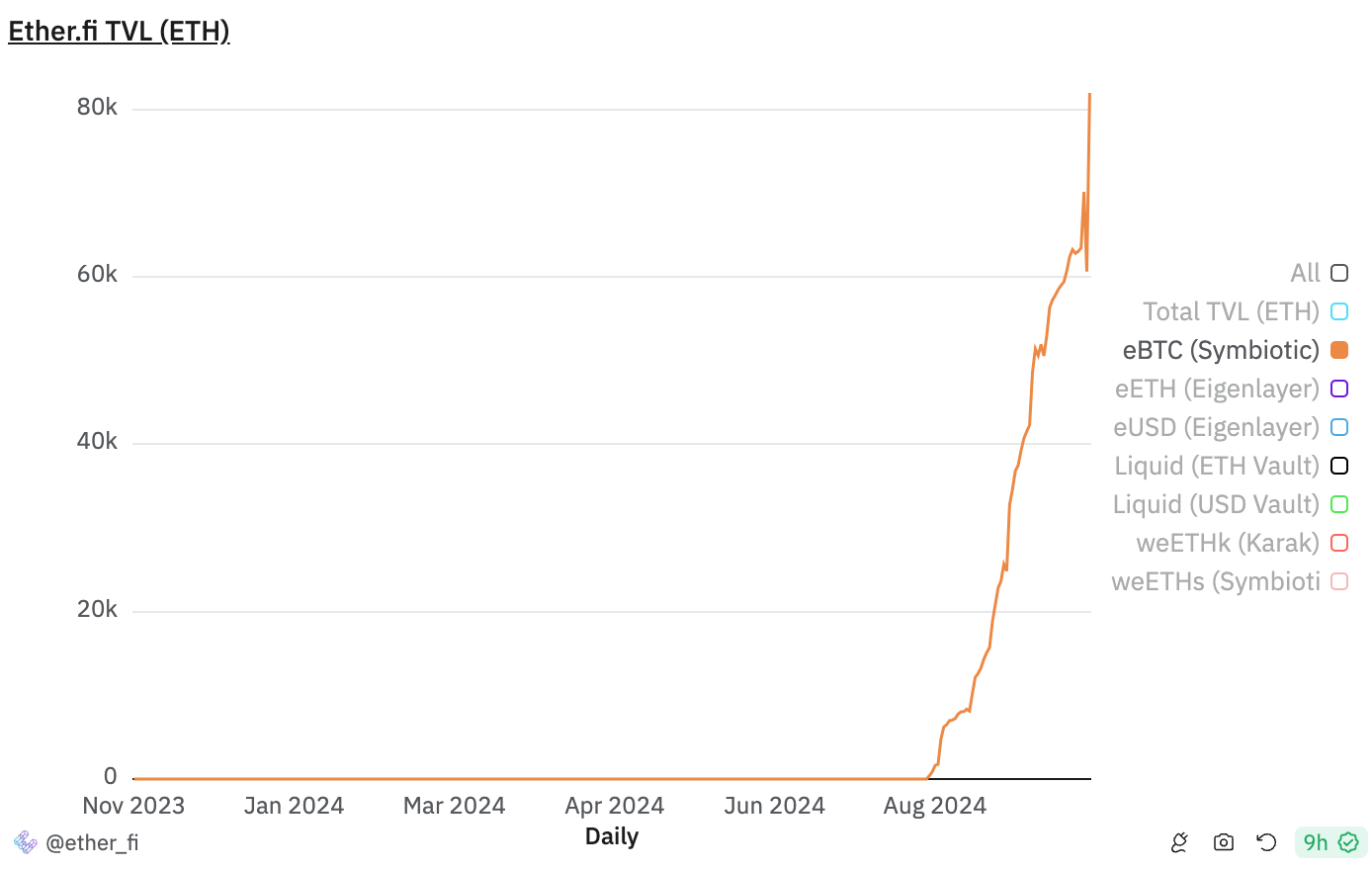
eBTC is a BTC LRT offered by ether.fi in partnership with Lombard, currently receiving Babylon, Lombard, ether.fi, Symbiotic, and Veda points, adding a speculative element to its current supply. Its supply has grown rapidly, breaking $150M recently (the chart below shows it in ETH terms).
Source: https://dune.com/ether_fi/etherfi
Its liquidity is concentrated on Curve.

Curve
According to its Whitepaper, the token carries a 7-day withdrawal period, though “most withdrawals will complete well before this maximum window.”
eBTC Volatility
Although eBTC is a relatively new asset, making its volatility values less reliable, its volatility against BTC has been fairly low, indicating acceptable peg adherence. The 30-Day Daily Annualized Volatility stands at 4.45%.
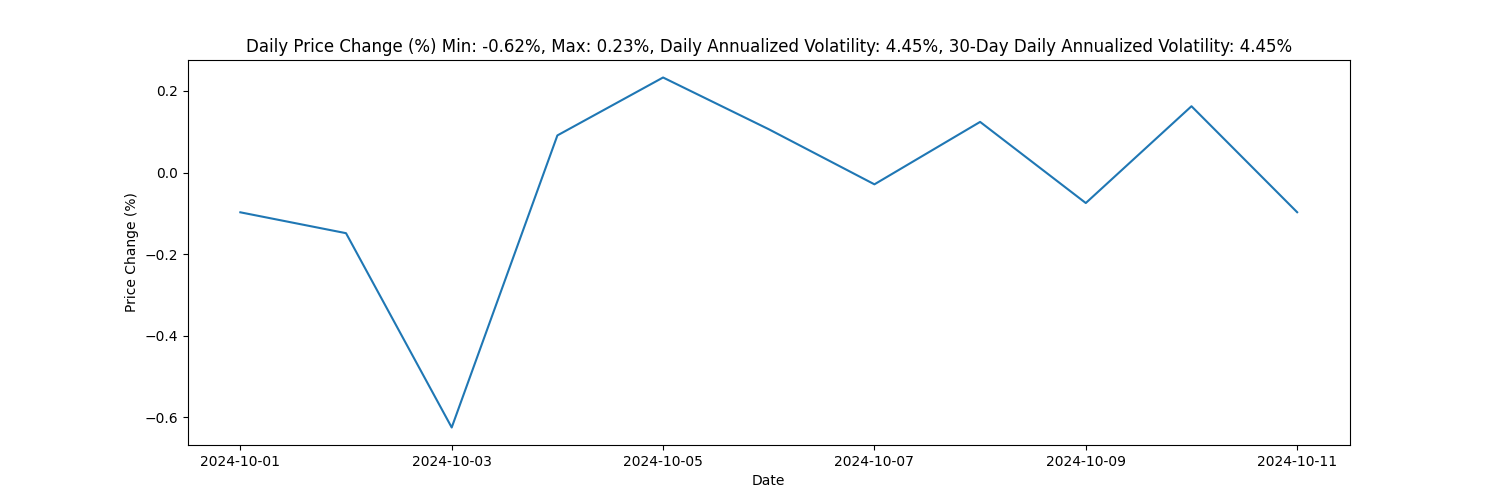
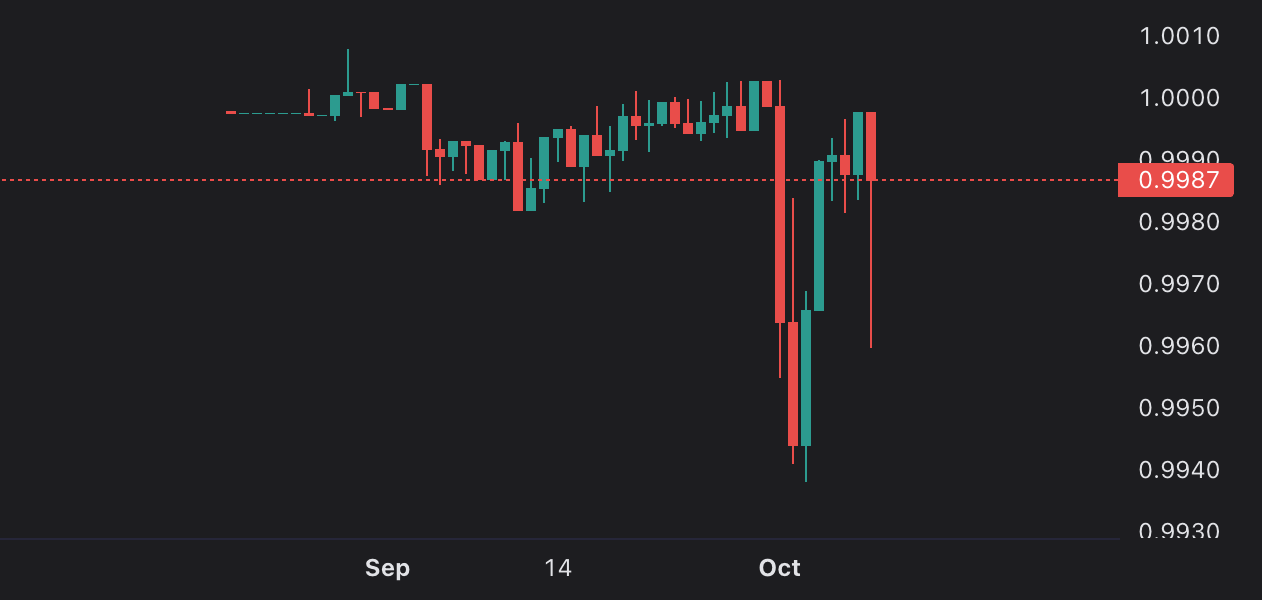
On decentralized exchanges, eBTC shows similar stability, with a maximum daily drop of 0.62% against BTC. While the size of this depeg is not particularly concerning, it took three days for the asset to return to its peg, suggesting weaker mean reversion properties. This slow recovery highlights potential challenges in maintaining a consistent peg.
Collateral Factor, Liquidation Threshold, and Liquidation Bonus
Given the asset’s relatively short lifespan and weak mean reversion observed on DEXs, we recommend adopting more conservative parameters than WBTC. Hence, we suggest setting the LT at 72% and the CF at 68% while matching WBTC’s Liquidation Bonus at 10%.
Chaos Labs is prepared to facilitate a LT and CF increase if the asset shows prolonged stability and peg adherence.
Interest Rate Curve
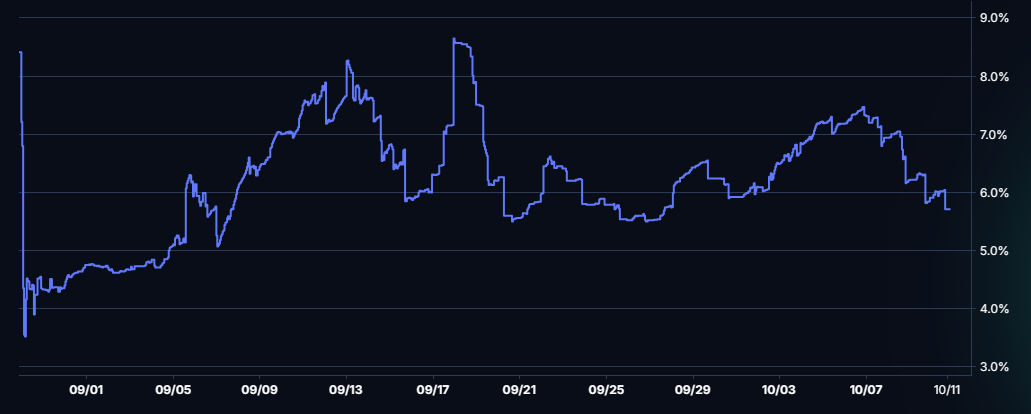
Since the most common use case for borrowing eBTC on competing lending protocols is to deposit it into Pendle, we recommend setting the Interest Rate slightly lower than Pendle’s APY to attract borrowers. However, we still suggest maintaining the Kink at 45% while we assess the level of demand for this specific strategy.
Supply and Borrow Cap
We recommend setting supply caps according to our usual methodology, at two times the liquidity available below the liquidity bonus and the borrow cap slightly higher than the demand at the kink. Thus, we arrive at a recommendation of 25 eBTC for the supply caps and 12.5 eBTC for the borrow cap. While this is somewhat conservative relative to supply, we are prepared to facilitate supply cap increases if the user’s behavior allows it.
Pricing eBTC
Given eBTC’s available withdrawals, we recommend using the asset’s exchange rate to avoid liquidation cascades in the event the token depegs.
Recommendation
| Asset | eBTC |
|---|---|
| Chain | Ethereum |
| Pool | Core |
| Collateral Factor | 68% |
| Liquidation Threshold | 72% |
| Liquidation Incentive | 10% |
| Supply Cap | 25 |
| Borrow Cap | 12.5 |
| Kink | 45% |
| Base | 0% |
| Multiplier | 9% |
| Jump Multiplier | 2.0 |
| Reserve Factor | 20% |